
Heating and cooling are responsible for over 50 percent of the energy consumed in U.S. homes. This makes solar heating and cooling (SHC) systems a highly effective way for homeowners to save money. Over 88 percent of America’s families currently rely on air conditioning. Fifty to seventy percent of summer electricity costs in warm climates come from air conditioning alone. Therefore, the cost savings potential is significant. SHC systems can save homeowners up to $1500 a year on their energy bill. The cooling cost reduction with SHC ranges from 40 to 80 percent.
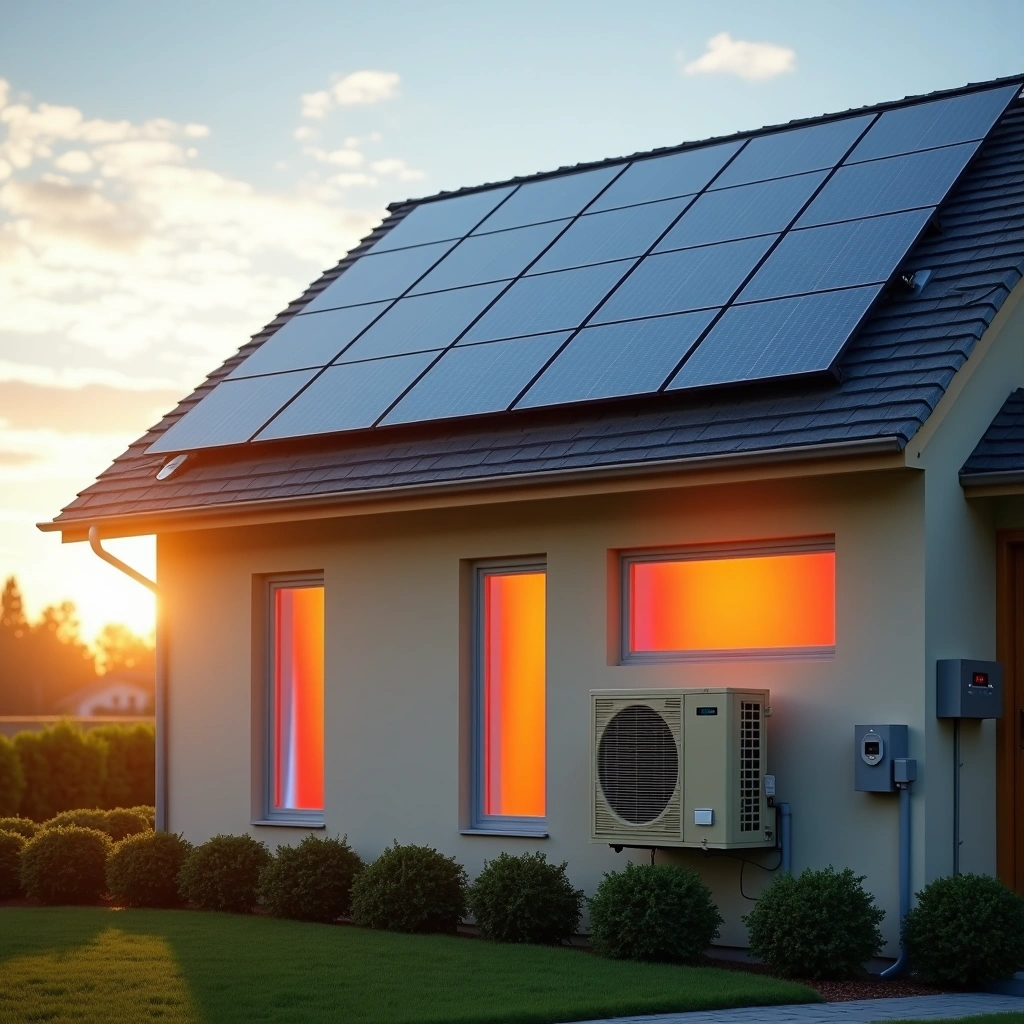
Can Solar Panels Operate My Home’s Air Conditioning and Heating Systems?
Yes. This article will review the specifics regarding how to install solar-powered air conditioning and heating systems. Also look at how to obtain the largest possible amount of savings.
Understanding Solar Heating Cooling Systems
As previously mentioned, solar panels produce DC electrical power. Most standard air conditioning systems and heating devices can utilize this same type of power. Your AC unit, heat pump, and/or HVAC device(s), along with other climate control systems, can use solar-generated electricity to cool/heat your home. Split-system air conditioners, ductless mini-split systems, and air-source heat pumps can provide both heating and cooling functions.
You can also use a grid-tied solar panel system with your existing HVAC unit. As stated above, solar panels produce DC electrical power; an inverter converts it into usable AC electrical power. Conventional AC electric devices are compatible with this AC electrical power. Your solar panels will charge your climate control system during daylight hours, and the system will draw power from the grid when solar power is unavailable (i.e., at night).
Bi-directional meters measure the amount of energy your home consumes versus the amount of energy produced by your solar panels. If your solar panels generate excess energy, it is sent back to the grid for credits.
There are several different ways to configure a solar heating/cooling system. There are two primary configurations used today. One is a whole-house photovoltaic system where a single array produces electrical energy to supply all of the AC and heating demands in your house. Another configuration is called a “hybrid” system. Hybrid systems combine a solar collector (usually a flat plate collector) with a traditional furnace (gas-fired). The solar collector captures free energy from the sun and heats your domestic water and radiators. When the solar collector cannot meet all of the heating demands of your home, the gas-fired boiler kicks in. Hybrid systems have become popular because they minimize dependence on fossil fuels while maintaining reliable heating/cooling for your family.
How Does Production Match Up with Seasonal Demands?
In contrast to many other forms of renewable energy sources such as wind turbines, which may not always operate at full efficiency when energy demand is greatest, solar panels do align well with seasonal patterns. Peak summer months generate the most electrical energy. Typically, 50% more electrical energy is produced in July and August than in December and January. This makes sense since your AC needs are greater during these months than at any other time.
Since solar panels produce most of their energy during the summer months, when your AC needs are greatest, this naturally helps reduce your dependence on the grid during times when electricity rates increase dramatically.
Market Growth Potential of Solar-Air Conditioners
According to a report published in May 2017 by Grand View Research, Inc., titled “Global Solar Air Conditioner Market Analysis”, the global solar-air conditioner market was valued at approximately USD 2.22 billion in 2022 and is expected to grow at a CAGR of 13.6% from 2022 through 2030. Based on a study conducted by the National Renewable Energy Laboratory (NREL), space heating accounted for approximately 45% of household energy usage, followed by space cooling at around 17%, and water heating at about 12%. This represents approximately 74% of all household energy use and presents a significant opportunity to reduce homeowners’ expenses through the use of solar heating-cooling systems.
Potential Reduction in Cooling Expenses in Warm Climates
Direct Connection Between Solar Power and AC Unit: Central air conditioning units typically draw about 3,500 watts of electricity. Smaller units for individual rooms can be as little as 500-1500 watts. Medium-sized central air units will run anywhere from 1,000 to 1,500 watts depending on fan speed and compressor activity. Since most AC units consume around 1,000 to 1,500 watts, this is clearly manageable for a typical residential solar panel system to accommodate these loads when production and usage are perfectly timed.
A 3000-watt AC unit operating six hours daily in Los Angeles would require 9 kWh after accounting for cycles needed for temperature stabilization. To accomplish this, you would need approximately 2000 W of solar capacity with approximately 5.6 peak sun hours available. You could use five 400-watt panels to accomplish this. Operating this AC on grid purchased electricity would cost you $1.87 per day and total $682 per year at Los Angeles rates of 20.8 cents/kWh.
Passive Cooling Using Roof-Mounted Solar Panels:
When installed properly, solar panels mounted on your roof act as a physical barrier that lowers your roof temperature by 5-10 degrees F on extremely hot summer days. The shading effect reduces heat absorption before it enters your attic space and, subsequently, your living areas. The airspace created between the panels and your roofing materials allows convective flow, allowing hot air to rise out of the space, thus lowering your AC load without producing any additional electricity.
Advantageous Timing of Maximum Output During Peak Hours:
Maximum output occurs between 10am and 4pm during peak summer months. That is exactly when demand for AC peaks. Spring and summer months account for 60-70% of total annual energy production. Peak production occurs in June, July, and August. The perfect overlap between maximum production and highest demand enables you to use your own electricity rather than purchase expensive peak-rate power.
Reduction in Grid Dependency During High Rate Times:
Time-of-use billing assesses premium rates during high-demand evening hours. Solar output is significantly diminished at these hours. Without battery backup, you are forced to pull grid power at the most costly hours.
Battery Backup Solution:
Energy storage batteries enable you to capture excess daytime energy and use it during off-peak hours. By storing excess energy during peak production hours (e.g., during summer) you avoid paying peak rates for off-peak energy usage (e.g., during winter). Battery backup will help you save money by avoiding peak rate purchases.
Reduced Winter Heating Bills Using Solar-Powered Heat Pumps:
Solar-Powered Heat Pumps Explained:
Heat pumps are devices that utilize both outdoor and indoor heat to maintain desired temperatures. The basic function is as follows: your heat pump extracts heat from outside air, raises its temperature by compression, then passes that heated air through a heat exchanger, transferring it to your home’s heating distribution system. A common application for solar-powered heat pumps uses the electrical energy produced by your solar panels to power the heat pump,, providing additional heating capability at no additional cost. Additionally, some models incorporate batteries, allowing excess daytime electrical energy production to be stored and utilized when needed.
Example: A solar-powered heat pump consisting of a 5 kW heat pump paired with four kW of solar panels would likely provide sufficient heating capacity for an average-sized home with two-to-three bedrooms.
Capacity for Electrical Energy Production During Winter Months:
Due to limited sunlight exposure during winter months, your solar panels generate significantly less electrical energy (approximately 25-50%) than they do during peak summer months. Although reduced sun exposure negatively affects overall PV system production during winter months, PV cell efficiency can increase by up to 20% when operating at colder temperatures. The major limitation, therefore, remains reduced sun exposure rather than decreased-temperature operation. Even so, PV systems continue to provide sufficient electrical energy to support the continued operation of heat pumps during periods of partial cloud cover.
Seasonal Thermal Storage Solutions:
Temporary thermal storage systems include short-term tank-based designs that collect excess heat from a building’s radiant surfaces or mechanical systems for later use when PV output is reduced. For example, a 300-liter temporary thermal storage tank has an approximate thermal storage capacity of 22.5 kWh.
Long-term seasonal thermal storage solutions allow excess summer thermal gains to offset winter thermal losses.
Integration with Existing Heating Systems:
By integrating your solar-powered heating-cooling system with your existing heating systems, you can expect reductions in conventional heating loads ranging from thirty to sixty percent via hybrid system implementation. Once implemented, the system will automatically switch between heating options based upon what is available.
Increasing Value of Your Investment in Solar Heating-Cooling Systems:
Up Front Costs Compared to Future Savings:
Typically, a complete SHC system will cost between fifteen thousand dollars and thirty thousand dollars initially, whereas replacing an old HVAC system will generally cost between eleven thousand nine hundred fifty dollars ($11,950) and fourteen one hundred ten dollars ($14,110). However, SHC systems can reduce monthly cooling costs by forty to eighty percent — resulting in an average monthly savings of $46 per month. Assuming you replace your entire HVAC system with a new SHC system, it is estimated that you will recover your initial investment between five and twelve years thereafter — and every dollar saved thereafter will represent pure profit.
Federal and State Tax Credits/Grants:
Residential Clean Energy Credit: Provides a thirty percent tax credit on total installation costs until December 31st, 2032; decreases to twenty-six percent in the year 2033; and twenty-two percent in the year 2034.
State Exemption From Sales Taxes: Washington State exempted solar equipment rated below one hundred kW from state/local sales taxes until December 31st, 2029 — representing up-front savings potentially exceeding one thousand three hundred seventy-five dollars ($1375).
Net Metering: Allows you to accumulate excess daytime energy generation as credits toward future utility bills when energy production declines during winter months.
Best Practices for Configuring Your System:
Smart Thermostats: Provide enhanced features that enable you to program heating and cooling adjustments based on solar availability.
Panel Positioning: Optimize panel position for best exposure to sunlight without obstruction from trees or structures.
High Efficiency Components: Use high-efficiency components along with optimal insulation strategies to minimize energy consumption.
System Maintenance & Performance Improvement:
Perform professional maintenance activities at least twice annually.
Average maintenance cost per kW = $30-$70 per annum.
Clean solar panels regularly to optimize sunlight absorption.
Monitor inverter performance periodically.
Conclusion:
SHC systems provide a practical means for reducing household energy costs year-round. Your household can realize savings between 40 and 80 percent on cooling costs, plus potential savings on heating costs as well. Your SHC system will pay for itself within five to twelve years — depending on the number of years remaining on any applicable warranties — or simply put: once you have recouped your initial investment — every subsequent dollar saved represents pure profit!
FAQs
Q1. Can solar panels actually reduce my electricity bill? Yes, solar panels can significantly reduce your electricity bill, though the savings depend on your energy usage patterns and local utility rates. While you may still pay fixed charges like grid connection fees and transportation costs, solar systems typically reduce monthly electricity expenses by offsetting consumption during peak production hours. Many homeowners save $1,500 or more annually on energy costs when accounting for reduced heating, cooling, and overall electricity usage.
Q2. Why might my electric bill still be high after installing solar panels? Your bill may remain higher than expected because a significant portion consists of fixed charges, taxes, and grid transportation fees that solar doesn’t eliminate. Additionally, if you’ve increased your electricity consumption by adding electric vehicles, heat pumps, or running air conditioning more frequently, your usage may have grown even though solar is offsetting much of it. The real savings often appear in other areas like eliminated heating fuel costs or gasoline expenses rather than just the electricity bill itself.
Q3. What are the main disadvantages of solar heating systems? The primary disadvantages include high upfront costs ranging from $15,000 to $30,000, reduced energy production during winter months (25-50% less than summer), and ongoing maintenance expenses of $30-$70 per kilowatt annually. Solar heating systems also depend on weather conditions and may require backup heating sources during extended cloudy periods. Additionally, without battery storage, you’ll still rely on grid power during nighttime hours when solar production stops.
Q4. How do solar panels help with both heating and cooling costs? Solar panels generate electricity that powers air conditioning units during hot months and heat pumps during cold months. The system produces peak output during summer when cooling demands are highest, directly offsetting 40-80% of cooling costs. For heating, solar-powered heat pumps operate 3-5 times more efficiently than traditional systems. The panels also provide passive cooling by shading your roof and reducing heat absorption by 5-10 degrees Fahrenheit.
Q5. Do solar heating and cooling systems work during winter? Yes, solar systems continue working in winter, though they produce 25-50% less electricity due to shorter daylight hours. However, solar panels actually operate more efficiently in cold temperatures, with potential output increases up to 20%. When paired with heat pumps, the system can reduce conventional heating costs by 30-60%. Most installations include grid connection as backup to ensure reliable heating when solar production is insufficient.
Solar Power Heating and Cooling | Blog Article. | Hannah’s Heating and Air, LLC | All Rights Reserved | Inman, SC